Native Calyx durability
Every read pins an MVCC sequence and health verification inspects SST, WAL, manifest, and Ledger bytes.
Open source linesSecurity brief
Leapable's repo-owned Calyx Vault runs on the user's machine. Markdown and text files never leave your disk. PDFs and images use transient cloud OCR, wiped per run. SHA-256 chain hashes track source byte to final answer, and the Ledger is engine-enforced append-only.
SOC 2 Type II is in progress for Q3 2026. Customer documents are not used to train Leapable models.
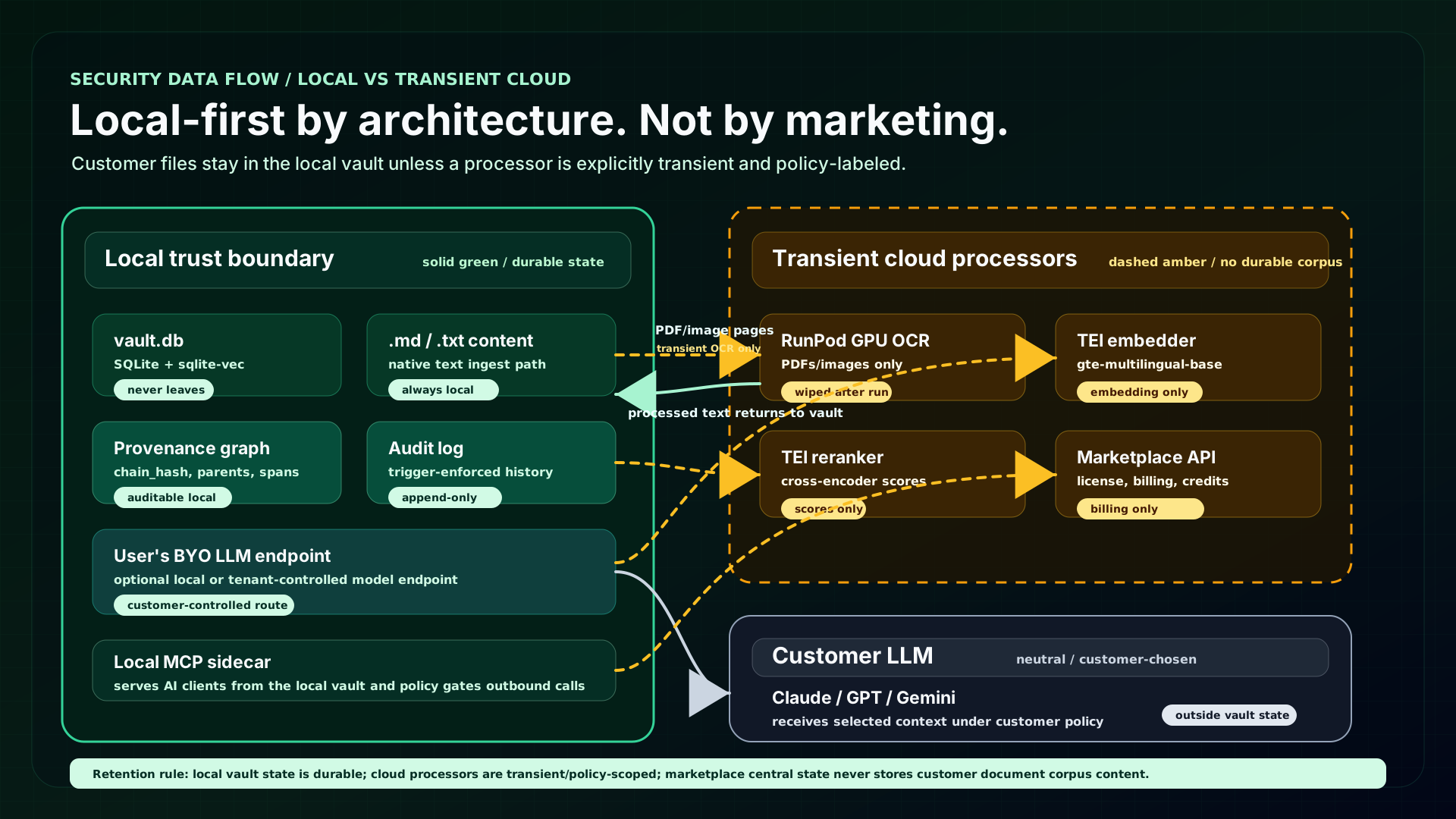
The diagrams below separate local vault state, transient cloud processing, and the customer-selected AI client boundary.
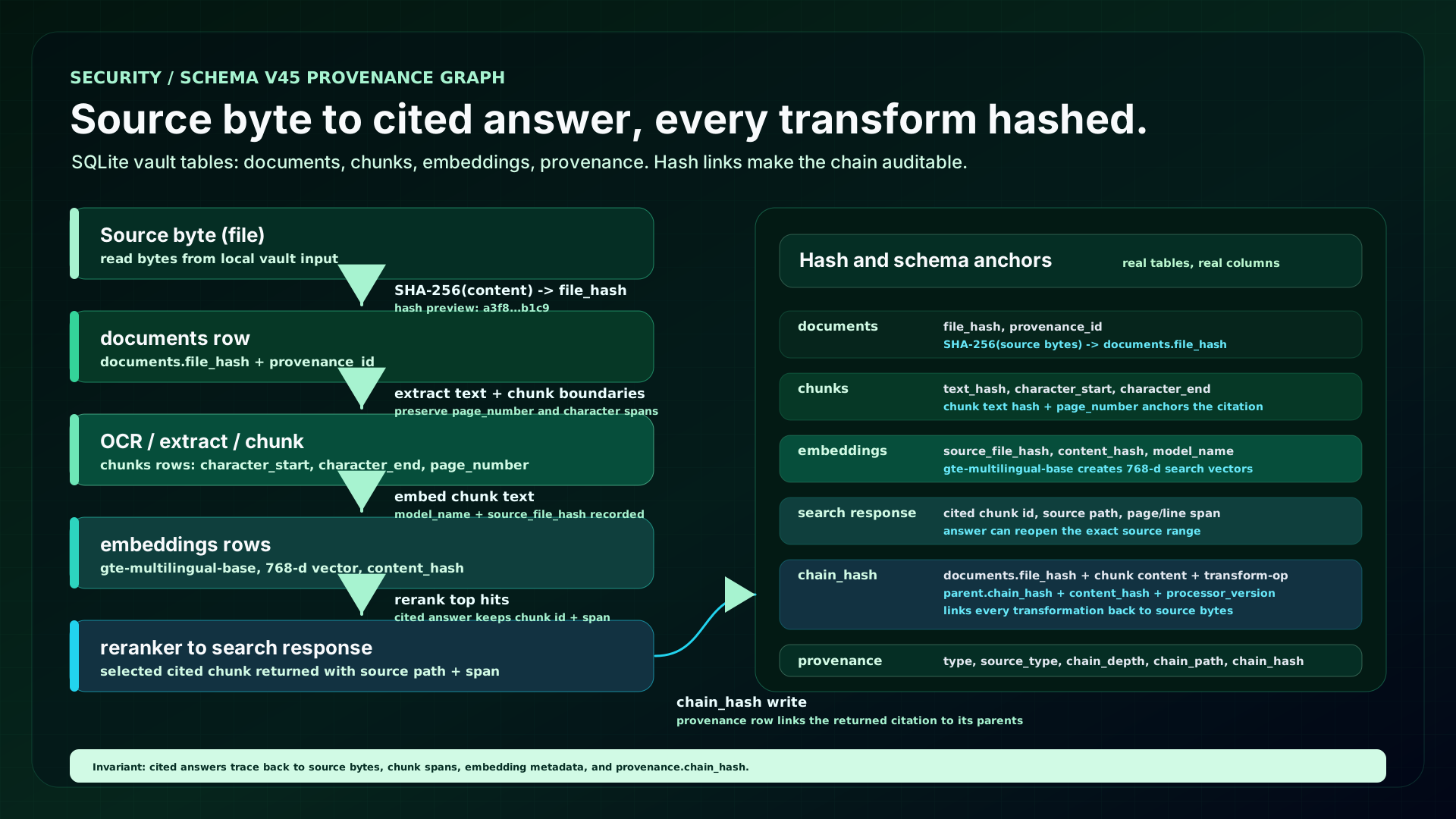
The walkthrough follows one file from local vault ingest through transient OCR, provenance hashing, AI-client retrieval, and source verification.
Transcript pending until the security walkthrough is uploaded.
Every read pins an MVCC sequence and health verification inspects SST, WAL, manifest, and Ledger bytes.
Open source linesVector slots and deterministic HNSW-style indexes are owned by the repo-owned Calyx engine.
Open source linesThe engine rejects deletes and tombstones against the Ledger column family and verifies its hash chain.
Open source linesThe worker refuses to continue when a CUDA-pinned OCR image resolves away from GPU.
Open source linesBilling, sessions, payouts, and operational state use central PostgreSQL with bounded statement and transaction timeouts.
Open source linesMarkdown and text files are processed locally with zero OCR compute cost and no cloud OCR dispatch.
Open source linesToggle each setting to see the operational consequence. These are educational states; the linked Workbench settings are the source of truth.
The sidecar reads vaults from the absolute path in
LEAPABLE_DATABASES_PATH. That path must exist before the managed runtime
starts.
IN PROGRESS. Target Q3 2026. No completed certification is claimed. Read the status page.
Local-first storage keeps customer-controlled data local unless a user chooses a cloud processing path or sends context to an AI provider.
Data minimization and local vault ownership support residency and deletion workflows.
Architecture supports minimization, customer-controlled storage, and processor review.
Everything else is local to the user's machine.
marketplace.leapable.ai)
sidecar → API
Purpose: license validation, billing, cloud OCR dispatch, embeddings, and reranking.
Data sent: license/account headers, job metadata, and processing payloads needed for the requested operation.
Open source linesPurpose: OCR for PDFs, images, and Office-style files that need document parsing.
Data sent: file bytes for the job. Retention: transient job processing, then cleanup.
Open source linesPurpose: convert text into 768-dimensional vectors.
Data sent: text selected for vector conversion; response is vectors and model metadata.
Open source linesPurpose: score top candidate passages for relevance.
Data sent: request-scoped question and candidate passages; candidate text is not persisted by the reranker.
Open source linesPurpose: final answer generation in the user's selected AI client.
Data sent: whatever the user and client choose to include from cited Leapable results.
Open source linesBilling, subscriptions, taxes, invoices, payment processing, and Connect payouts.
Transactional email for sign-in and account notifications.
DNS, Pages, Tunnel, Access, edge security headers, and routing.
Transient GPU OCR workers for PDFs, images, and document parsing.
Limited backups and infrastructure support where configured.
Leapable does not train models on customer documents. Customer documents live in independent local Calyx Vaults. Shared operational state is central PostgreSQL state for accounts, billing, jobs, sessions, and support operations, not a pooled customer-document training set.
Yes. Today Leapable is local-first per user machine. Self-hosted aiwonder deployment instructions exist for customer-run backend services. Read the on-prem guide.
Local .md and .txt files plus a local AI model can support
air-gapped work. Cloud OCR, embeddings, and reranking require network access.
Available under NDA. Contact security@leapable.ai.
Stripe, Resend, Cloudflare, RunPod, and AWS. A DPA template is available for review.
Calyx Vault directories live on the user's machine: macOS
~/Library/Application Support/Leapable/, Windows
%APPDATA%\Leapable\, and Linux ~/.local/share/Leapable/.
Override with LEAPABLE_DATABASES_PATH.
The local Calyx Ledger is append-only. The engine rejects deletes and tombstones and verifies the hash chain during health reads.
The architecture is designed for regulated review with local-first storage, minimization, and source-linked auditability. No FedRAMP certification is claimed.
You can retain the source documents and verified .leapvault exports on
your machine independently of Leapable's services.